K-pop Fandom 101

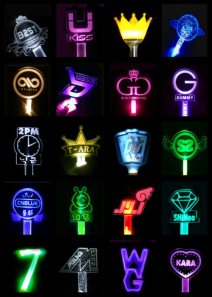
Glowsticks for various K-pop groups and artists

Many know that K-pop fans play an active role in K-pop, but few may know just how complex K-pop fandoms are.

What is a Fandom?

The Oxford English Dictionary defines fandom as “the world of enthusiasts for some amusement or for some artist.”  Fandom refers to a collection of fans of the general pursuit or to a collection of fans of a specific practitioner of the pursuit.

So, K-pop fandom can refer to fans who identify as fans of K-pop, the amusement.  Of 790 respondents who answered a question about why they were K-pop fans between April 29, 2011 and April 15, 2012 as part of an iFans survey, many described themselves as fans of K-pop in general, not of a particular group or artist.  One respondent noted:  “95% of the songs in my Ipod belong to the Kpop genre. Also, I constantly update myself with Kpop news from various internet websites” (Anderson).  Another noted “spending lots of time watching Kpop news, videos and listening to Kpop songs” (Anderson). Several respondents also noted that they were members of online K-pop media outlets and cover dance groups.

K-pop fandom can also refer to fans who identify as fans of an individual K-pop group or solo artist.   While media frequently suggests that K-pop groups are alike, the fandoms of specific groups and artists are very different.  Some of the more defined fandoms have developed their own culture and languages.

K-pop’s Fan Communities

Individual K-pop fandoms are made even more complicated by their global nature, as they involve fans inside and outside of Korea.

On one hand,  there are official fan clubs sanctioned by the artist such as those described by Paul Théberge:  “Since the mid-1990s, it has become common for stars to have their own professionally run websites. . . . These sites are run variously by artists, their management, their record companies, or more recently, by specialized third-party interests” (493). Often after a K-pop group or artist debuts, management and the artist will name their fans, create an official fan club and designate an official fan club color.   For example, Starship Entertainment debuted the male group Boyfriend in May 2011, and announced the name of the fanclub in August 2011:  “Despite many feeling ‘Girlfriend’ would fit the group’s fanclub name perfectly, Boyfriend felt the name would have not been appropriate for their male fans, so instead Boyfriend fans will now be called ‘Best Friends’” (“Boyfriend Reveals Fan Club Name).  Decisions about fanclub names are often made with fans in mind.  Those who obtain membership in these official fan clubs receive perks, including advanced notice of activities, access to merchandise and preference in concert seating.

However, most of these official fanclubs are not open to fans outside of Korea.  Blogger BOYMILK reports:  “Fan club applicants to any fan club for SM Entertainment artists generally must have a Korean Social Security number (chumin tŭngnok pŏnho, 주민 등록 번호) in order to apply.  This makes it effectively impossible for international K-pop fans to join official fan clubs for some of K-pop’s most famous idol groups.” Nevertheless,  fans outside of Korea have established hundreds of unofficial fan communities on blogs and websites, Twitter accounts, Facebook pages and Tumblrs.  The following graphic shows how fandoms are represented on Twitter. It includes fandoms from various countries, including Brazil, the Philippines, Chile, Spain, Indonesia, Japan, France and Italy.  It also includes a range of groups, from the “idol groups” like f(x) and SHINee, to bands like F.T. Island, to hip-hop artists like Drunken Tiger and Epik High.

Word cloud generated by KPK's Twitter Lists
Word cloud generated by KPK’s Twitter Lists

While these fan communities are not subject to corporate control and do not receive the perks of the official fanclubs, they do play a significant role in K-pop.  For example, Soshified is website for a global community in support of the female group, Girls’ Generation (also known as SNSD).  Reporting more than 10 million page views per month, the site has organized meet-ups with fans in the United States and raised money for charitable causes including Japan relief and YMCA’s Youth Center in Seoul.  The organization also spearheaded  a 2011 “field trip” organized in partnership with the Korean Tourism Organization, which “included the attending of Girls’ Generation 2nd Tour Concert and MBC studio recordings. The field trip was heavily covered by the Korean media and Soshified members were featured in several Korean entertainment news broadcasts and newspapers” (Soshified, About Us).

The Landscape of K-pop Fandom

Given the number of K-pop groups and artists and the number of years since the beginning of Hallyu-era K-pop, there are hundreds of fan communities that make up K-pop’s individual fandoms. To further complicate the landscape, some individual fandoms will combine with other fandoms. The following graphic represents Twitter accounts of such combo fandoms, such as fans of both Shinhwa and SS501 (TripleChangjo), Infinite and SHINee (InspiritShawolGirl), and Super Junior and Girls’ Generation (Super Generation).
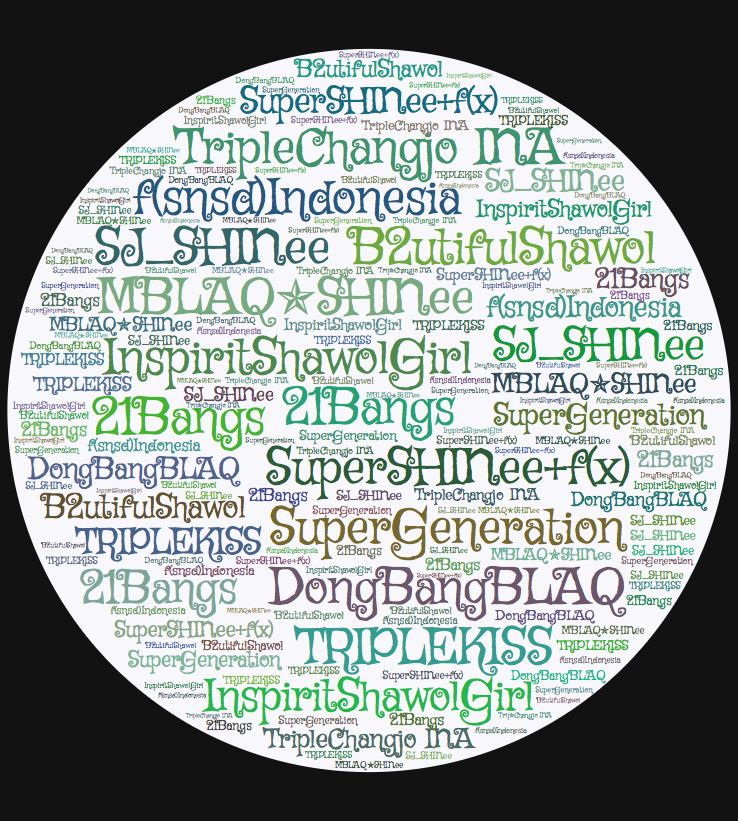
Word cloud generated from KPK's Combo Fandom Twitter List
Word cloud generated from KPK’s Combo Fandom Twitter List

Whether talking about the general K-pop fandom or individual K-pop fandoms, the first thing to know is that the landscape of K-pop fans is complicated.

Images
Glowsticks. K!. Web. 8 Dec 2013.

Word clouds generated from KPK’s Twitter Lists.

Sources
“About Us.” Soshified. Web. 8 Dec 2013. Anderson, Crystal S. “Hallyu K-pop Fans Data Set.” Unpublished Raw Data, Collected April 29, 2011-April 15, 2012.

“Boyfriend Reveals Fanclub Name.” gokpop.  11 Aug 2011. Web. 8 Dec 2013.

BOYMILK. “Hypocritical Hallyu: International Fans and K-pop Fandom.” Oh No They Didn’t!. 2 June  2013. Web. 8 Dec 2013.

Théberge, Paul. “Everyday Fandom: Fan Clubs, Blogging, and the Quotidian Rhythms of the Internet.” Canadian Journal of Communication 30 (2005): 485-502.

Creative Commons License
“K-pop Fandom 101” by Crystal S. Anderson is licensed under a Creative Commons Attribution-NonCommercial-ShareAlike 4.0 International License. Originally published on KPK: Kpop Kollective on December 3, 2013.
CONFERENCE ABSTRACT: Cross-cultural Visual Aesthetics in K-pop @ AAS 2015

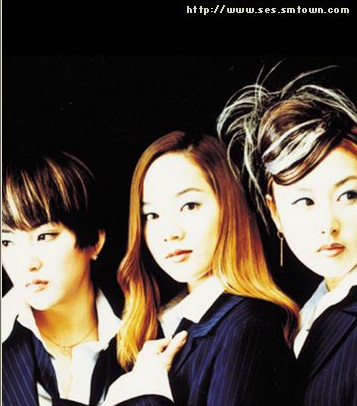
S.E.S
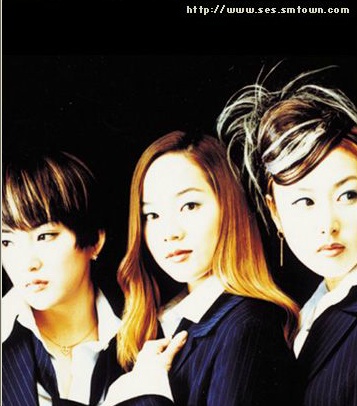
S.E.S

Glamour Girls: Cross-cultural Visual Aesthetics in K-pop

March 26-29, 2015 ♦ Association for Asian Studies ♦ Chicago, IL

One of the reasons for the global resonance of K-pop comes from its visuality, which crosses language barriers to reach a diverse and global audience. While governments and corporate agencies use this visuality to promote soft power, the global audiences that receive such images also make meaning outside of intentional image branding. Such constructions of meaning, especially for female K-pop groups, are derived from, K-pop, a hybridized form of Korean popular culture, and occur within established contexts, including a long tradition of “girl groups.”   Using theories of transnational feminism in popular culture and discourse analysis to examine images, music videos and fan responses through social media, this paper explores how three generations of contemporary female K-pop groups embody hybrid femininities that incorporate elements from 1990s African American R&B female groups. In turn, female fans interpret these hybrid femininities in ways that expand the notion of empowerment for women beyond mere “girl power.” This paper adds a contemporary and transnational element to the study female pop groups by placing female K-pop groups within a larger tradition of girl groups. It challenges interpretations of female K-pop groups that characterize them solely as vehicles that appeal to male desire by seeking to understand how the largely female fandom makes meaning of femininities represented by these groups.

Hallyu Harmony Update: S.E.S – Original Queens of K-pop

S.E.S
S.E.S

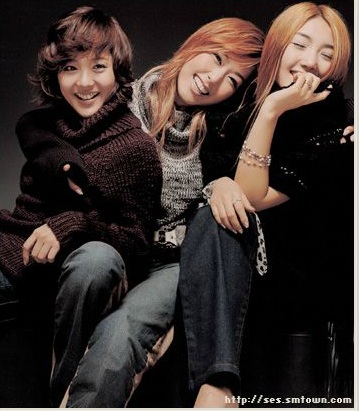
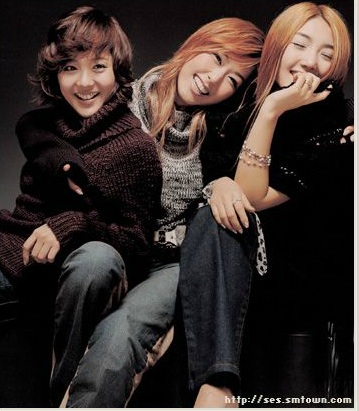
S.E.S is an acronym for “Sea, Eugene, Shoo,” the names of the three members of the group. Formed in 1997 by SM Entertainment, this female group consisted of Sea (better known as Bada, born Choi Sung Hee), Eugene (Kim Yoo Jin) and Shoo (Yoo Soo Young) and became the first successful female group in the Hallyu K-pop era. . . . See the entire exhibit at Hallyu Harmony: A Cultural History of Kpop.

What is ‘Western’ Music?: Foreign Influences on K-pop

Seo Taiji
Seo Taiji

K-pop is well-known as a hybrid musical tradition, incorporating elements from musical traditions developed in locales outside of Korea, including Japan, Latin America and the United States. While some attribute some of the foreign elements to “Western” music, other scholars recognize the tremendous impact of distinct black American musical traditions.

In “What Is the K in K-pop?: South Korean Popular Music, the Culture Industry, and National Identity,” John Lie describes the dynamic between traditional Korean popular music traditions and foreign traditions. During the 1970s, he points out, “In urban areas, in spite of the elite embrace of Western ‘classical’ music, the prevalent popular music was ‘trot,’ a Korean variant of Japanese enka” (343).  Yet, the incorporation of Japanese music seemed less foreign because “the register of Korean and Japanese musical sensibility remained stubbornly rooted in traditional musical meters” (344).  According to Lie, a quantum shift occurred with the emergence of Seo Taiji and the Boys in 1992. While he acknowledges that the group “was one of the first groups to incorporate rap music and hip-hop sensibilities to South Korean popular music,” he also asserts that Seo’s significance comes from “pioneering a new musical soundscape that became almost invariably ‘Western’ pop music” (349).  Throughout the essay, Lie creates a dichotomy between Korean traditional music and “Western music,” which often means rock music:  “There was, in short, a chasm between Cho [Yong Pil] and Elvis Presley or the Beatles, much less Pink Floyd or Led Zeppelin: the musical distance between South Korea and the United States (and the so-called West) remained significant” (346).  Lie collapses much of Western music, failing to note the impact of particular genres at particular times.

Most significantly, Lie overlooks the tremendous impact of African American music on K-pop. In K-pop: Roots and Blossoming of Korean Popular Music, Kim Chang Nam describes the impact of African American music rather than generic “Western” music:

It is not easy to discuss African-Americans’ influence on music in isolation within the scope of Korean popular music history. Considering the fact that the progression of Korean popular music unfolded under the profound influence of pop and rock from the United Kingdom and the United States, where African-Americans were prominent music pioneers of popular music, it should be noted that their impact indeed permeated the overall history of Korean popular music. (33)

Not only did this hold true for Korean music of the late 1960s, but also of the 1990s:  “It was the hip-hop of the early 1990s that marked the full-fledged emergence of a Korean hybrid hip-hop, the heir to the soul music that went through a short-lived boom at the end of the 1960s and the early 1970s and demonstrated a Korean variation on the genre. Just as soul music appeared as a hybrid form of soul-psychadelic, hip-hop instantly surged into the mainstream as a compromise form of rap and dance music” (70). Kim goes on to cite  Seo Taiji as “playing a critical role in popularizing hip-hop and rap music” (71).

The hybrid nature of K-pop requires the historiography of K-pop to untangle the complex impact of foreign musical traditions. Musical traditions like hip-hop and soul emerge under specific socio-cultural conditions, and carry specific meanings for their first audiences, which is often carried to more global audiences. Lie’s assertions place a premium on national distinctions that keeps traditional Korean music in view, but a comprehensive overview of K-pop’s development also requires Chang’s approach, which also makes distinct foreign musical traditions and their impact on Korean popular music visible.

Image

“Seo Taiji, Xahoi,” Hallyu Harmony, accessed September 3, 2014, http://kpop.omeka.net/items/show/50.

Sources

Kim, Chang Nam. K-pop: Roots and Blossoming of Korean Popular Music. Seoul: Hollym Publishers, 2012.

Lie, John. “What Is the K in K-pop?: South Korean Popular Music, the Culture Industry, and National Identity.” Korea Observer 43.3 (2012): 339-363.

Creative Commons License
What is ‘Western’ Music?: Foreign Influences on K-pop by Crystal S. Anderson is licensed under a Creative Commons Attribution-NonCommercial 4.0 International License.

Hallyu Chapter Goes to Press!

The edited collection, The Global Impact of South Korean Popular Culture: Hallyu Unbound (Rowman and Littlefield, edited by Valentina Marinescu), containing my submission, “HallyU.S.A: America’s Impact on The Korean Wave,” goes to press this September and should be available soon.

[The Global Impact of South Korean Popular Culture Hallyu Unbound ] fills a gap in the existing literature and proposes an interdisciplinary and multicultural comparative approach to the impact of Hallyu worldwide. The contributors analyze the spread of South Korean popular products from different perspectives (popular culture, sociology, anthropology, linguistics) and from different geographical locations (Asia, Europe, North America, and South America). . . . 

Girl Culture, Individuals and Neoliberalism

SISTAR's Sailor Moon Cosplay
SISTAR’s Sailor Moon Cosplay

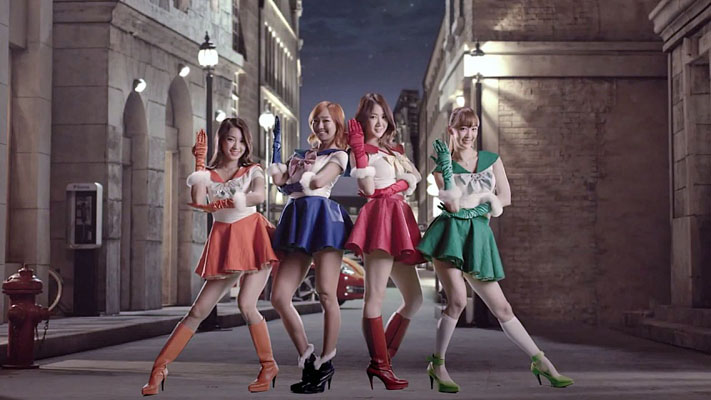
As part of my research for my book project, Crazy/Sexy/Cool: Transnational Femininities in K-pop, I’ve been reading up on girl industries and girl cultures. Such scholarship invariably places these in a neoliberalist context, and this has a bearing on female K-pop groups.  On one hand, K-pop girl groups are created by Korean agencies to appeal to global mass audiences, who are mostly female. At the same time, individual fans find such groups appealing, sometimes in ways that challenge the intention of the Korean agencies. Marnina Gonick and Yeran Kim take two different approaches that bear on my work on K-pop girl groups.

In “Idol Republic: The Global Emergence of Girl Industries and the Commercialization of Girl Bodies,” Kim argues that “girl bodies are the core of the neoliberal regime of knowledge, power and pleasure” (334). Specifically, female K-pop girl groups are “cultural content that is designed and cultivated in a corporate management system. The mission and process of self-making as idols, regulated in the norms of competition, strategic training and management, self-invention, flexibility and multi-playing, embodies neoliberal idealization” (336). This makes sense to a certain extent, given the careful training of idols in general. This strategy can be traced back at least to the Hollywood casting system of the early 20th century, which was used for male and female starts. There is a business as well as cultural interest in promoting certain images for profit. The image that is used to appeal to various ages and ethnicities of fans reflects an ambiguity:  “The girl’s excessively sexualized body image tears up the pretentiously safe discursive surface of the girl, which should be innocent and pure in its literal meaning. The girls’ ambiguous sexuality is placed between pretty child/seductive adult, and split between conflicting binaries of purity/sensation, innocence/maturity and neatness/vulgarity” (340).

It is this very tension between seemingly opposing images that Gonick seeks to unravel in “Between ‘Girl Power’ and “Reviving Ophelia.”  While she writes on girl culture beyond K-pop girl groups, Gonick argues that rather than reinforcing the binaries that emerge from girl cultures, we should see them as interconnected. She describes a binary that includes Girl Power, which “represents a ‘new girl’: assertive, dynamic, and unbound from the constraints of passive femininity,” and Reviving Ophelia, which “presents girls as vulnerable, voiceless, and fragile” (2).  She argues that both “participate in the production of the neoliberal girl subject with the former representing the idealized form of the self-determining individual and the latter personifying an anxiety about those who are unsuccessful in producing themselves in this way’ (2).  Gonick recognizes that these modes of girl culture are contextualized by neoliberalism as Kim does, but gives more emphasis to the way girls participate and make meaning of these complex images:  “Both Girl Power and Reviving Ophelia discourses emphasize young female subjectivities as projects that can be shaped by the individual rather than within a social collectivity. The discourses encourage young women to work on themselves, through the dual campaigns of the Do-It-Yourself self-invention and ‘girls can do anything’ rhetoric of ‘Girl Power,’ as well as the self-help books and programs that are available to remedy girls in crisis” (18).

Both authors talk about the divergent images promoted by girl cultures like those that surround female K-pop girl groups, but Kim favors a structural interpretation of how fans interpret those images. She relies on reading such interpretations through the economic and governmental means that produce them and elides the interpretative work that fans do. Gonick keeps open the possibility that fans read those conflicting images in ways they may find empowering or the foundation for self-improvement.

Image

“SISTAR’s Sailor Moon Cosplay Tickles Fans’ Fancy.” KoreAm Journal. 17 Jan 2014. Web. 28 Aug 2014.

Sources

Gonick, Marnina. “Between ‘Girl Power’ and ‘Reviving Ophelia”: Constituting the Neoliberal Girl Subject.” NWSA Journal 18.2 (2006): 1-23.

Kim, Yeran. “Idol Republic: The Global Emergence of Girl Industries and the Commercialization of Girl Bodies.” Journal of Gender Studies 20.4 (2011): 333-345.
Creative Commons License
Girl Culture, Individuals and Neoliberalism by Crystal S. Anderson is licensed under a Creative Commons Attribution-NonCommercial 4.0 International License.