
“Wish” is a track from 4MEN’s 2000 album, Andante.
Image: “4MEN, Promo (Korea.com),” Hallyu Harmony, accessed January 2, 2015, http://kpop.omeka.net/items/show/393.

Scholar | Writer | Educator | Administrator

“Wish” is a track from 4MEN’s 2000 album, Andante.
Image: “4MEN, Promo (Korea.com),” Hallyu Harmony, accessed January 2, 2015, http://kpop.omeka.net/items/show/393.

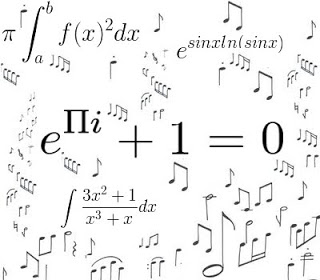
In looking for critical approaches to emotional expression in music, I discovered the work of Patrik N. Juslin, Anders Friberg and Roberto Bresin, who propose a computational model to analyze emotion is music. This computational model simultaneously de-emphasizes cultural meanings of music while providing a vocabulary to describe emotional expression in music.
In “Toward a Computational Model of Expression in Music Performance: The GERM Model,” Juslin, Friberg and Bresin note that there are several approaches used to study the expression of emotion in music, including “generative rules,” “essentic forms,” ” cues from vocal expression of emotion,” “composers’ pulses” and “physical motion” (64). In response, the authors propose a computational model that integrates these approaches, the GERM Model: “The general aim of the GERM model is to describe the nature and origin of patterns of variability in acoustic measures shown over the time-course of a human music performance” (65-6). The authors go on to describe the way these approaches come together in a way that allows them to draw meaning from a computational analysis.
On one hand, the computational approach does not seem to be compatible with my inquiry, which focuses on how English-speaking audiences of K-pop determine emotional meaning from music which contains lyrics in a foreign language, namely, Korean. Attempting to apply a computational model to creative expression seems odd, in that such an approach uses something akin to the scientific method to reduce artistic nuances to numbers, formulas and algorithms. Indeed, Juslin, Friberg and Bresin use just that language to describe computational methods, for they note, “It is commonly suggested that the central act of the scientific method is to create a model,” which “is a simplified representation of a phenomenon in terms of its essential points and their relationships” (65). From a cultural studies point of view, this still leaves certain questions unanswered. Moreover, the classical music and subsequent performances under investigation in this study may be more amenable to a computational approach than popular music, which, by its very nature, is structured differently.
On the other hand, the authors do provide a vocabulary that I can use to describe the emotional expression of music. In describing the GERM model, the authors note scholarship that shows that “performers are able to communicate specific emotions to listeners” by using “a code which involves a whole set of acoustic cues (i.e. bits of information)”(71). They proceed to summarize such cues and link them to certain emotions. For example, the authors associate “fast mean tempo” and “bright timbre” with happiness, a positive valence, but “slow mean tempo” and “dull timbre” with sadness, a negative valence. Because many of us listen to music so often, we may be so familiar with such cues that we do not pay them much attention. However, such a summary is helpful in that it can help me to reveal these common cues in K-pop and understand how listeners make meaning out of them.
Image
“Math in Music Project.” The Mathinator. 12 Oct 2012. Web. 2 Jan 2014.
Source
Juslin, Patrik, Friberg, Anders and Roberto Bresin. “Toward a Computational Model of Expression in Music Performance: The GERM Model.” Musicae Scientiae 5 (2001-2002): 63-122.


iFans: Mapping K-pop’s International Fandom is a digital project that examines the attitudes, practices and creative output of global K-pop fans. VIPs (as fans of BigBang are called) were given the opportunity to participate in an online interview with questions geared toward their experience as BigBang fans. Whale, a VIP, wrote about the criticisms about BigBang as well as the group’s status as an idol group. Read more here….


Whether it’s excited yelling by fans or crying by K-pop artists, emotions run deep in K-pop. While some focus on obsessive emotional attachments and behaviors by fans, research shows that fans themselves describe a range of emotional responses to K-pop. 100 responses by 18- to 30-year-olds show that fans find K-pop to be a source of happiness, hope and motivation. These responses are part of a five-year study on international fans of K-pop housed at KPK: Kpop Kollective.
Some writers tend to characterize fan activities and emotional expressions in negative terms. Patricia of Seoulbeats describes emotional expressions of appreciation for K-pop as bordering on obsessive: “I think there’s something to be said about my stance on the emotional toll that idol fandom takes on its devotees. That’s why I become so alarmed when I see these SHINee fans writing these intense emotional outpourings about how SHINee has changed their lives, or how much SHINee means to them. It breaks my heart to hear fans say that they turn to K-pop as a distraction for real life because their friends and family can’t offer them the same comfort that K-pop idols do.”
Adeline Chia writes that such emotions translate into obsessive behaviors: “Then there is K-pop’s effects on listeners. It turns functional people into crazed addicts, acting in robotic idolatry. . . . K-pop is also unique in inspiring extreme behaviour from fans and generating psychosis. Cyber-bullying and online smear campaigns are common practices by anti-fans who target a certain entertainer they hate. Sometimes, anti-fans turn into stalkers or criminals.”

To view entire “Can’t Stop Loving You” infographic, click here.
However, fans talk about the emotional appeal of K-pop in more positive terms. Some talk about overall emotions that go beyond the lyrics. One notes, “Kpop has the power to touch people even for those like me who don’t understand the lyrics. I think [it] is the r[h]ythm, the emotion in the voices, the dances. Kpop is like a best friend, it is here for you whenever you are happy or sad. Powerful stuff.” Another said: “The music is more touching and you can feel the emotions of the singers when they sing regardless of what genre.” Others link emotions to performances: “They sing and perform with passion and emotions, so even if you can’t really understand the lyrics you will get to know what it’s about by just listening. Kpop is not just another type of music it’s much more, that I can’t describe it with words” (Anderson).
These responses echo what scholars have discovered about emotional responses to music that transcend cultural differences. In a study with Western listeners listening to Hindustani ragas, Laura-Lee Balkwill and William Forde Thompson find that it is possible for music to travel cross-culturally: “According to our model, this indicates that the psychophysical cues for joy, sadness, and anger were salient enough to enable listeners to overcome their unfamiliarity with culture-specific cues and to make an accurate assessment of the intended emotion. . . . That naive listeners demonstrated such a high level of agreement with expert listeners, who were deeply familiar with the culture-specific cues embedded in the music samples, is remarkable” (58). In other words, listeners from other cultures can identify emotionally with music of a different culture, and this may shed light on why global fans identify with K-pop emotionally.
This emotional response runs the gamut. Many respondents describe how they find K-pop to be fun and happy. One notes, “Cause the music is always so free and fun to dance to. It simply makes me happy.” Another adds, “The songs are really refreshing, and listening to it puts me in a happy mood because of their lyrics and beats.” Other respondents link the happiness they feel from K-pop to their lives in general: “It always puts me in a good mood and makes me feel energized. Kpop sometimes can make you feel like your part of something bigger. It’s hard to explain but the feeling it gives you is great” (Anderson).
Others related K-pop to more somber emotions. One respondent says, “Because it’s very different and the music touches something in me, I mean this is not superficial, there are feelings in every song, this could be happiness or some sad feelings.” Another notes, “When I listen to sad songs I find that it have feelings in it and it will touched me too.” One says, “There’s an upbeat to the music that sometimes make you want to dance other times depending on where you heard it from makes you sad” (Anderson).
Some fans talk about how K-pop helps them through hard times. One respondent notes, “It was introduced to me at a hard time in my life and it has been the only music I listened to help me get through it.” Another says, “Kpop appeared in my life all of a sudden. I was really depressed back then and it helped me get out of my miserable state, pulled me out of the worst” (Anderson). Music can have the therapeutic effect these respondents describe. Annemiek Vink explains therapy methods, such as Guided Imagery in Music, which is “based on the assumption that the most appropriate music can be selected for healing purposes.” She further finds that the choice of music impacts the therapeutic results of GIM: “In all aspects, carefully selected music based on the person’s preference and personal background was far more effective than standard relaxation music” (153, 154).
This range of fairly positive emotions challenges negative characterizations of their emotional expression. These responses come from adults rather than young teenagers, so it is less convincing to describe them as obsessive along the lines of Chia. She refers to incidents involving K-pop celebrities, but respondents speak about their emotions mostly in relation to the music. When they do comment on the artists, it is often in terms of the positive relationship they have with fans. One notes, “The singers are so dedicated to their music and their fans. They put their real emotion into every word” (Anderson).
This emotional connection that some K-pop fans feel also translates into a discourse of protection, the desire to protect their group or artist from mischaracterizations. The Triple S Pledge encourages fans of SS501 “To support and shield them through hard times…To ignore rumors.” The same sentiments can be seen in the “Prom15e to Bel13ve and 10ve” philosophy held by some fans of Super Junior, which acknowledges every member regardless of current status or sub-group membership.
These findings suggest that emotion plays a role in the attitudes and opinions of adult global K-pop fans, often in a positive way.
Images
Anderson, Crystal. Infographic. “Can’t Stop Loving You.” 14 Dec 2012. Web.
European Kpop Fans. Digital Image. WeHeartIt. Originally posted on european-kpop-fans.blogspot.com. 14 Dec 2012. http://weheartit.com/entry/29104058
Sources
Anderson, Crystal S. “Data Set: Hallyu Kpop Survey 2 and Kpop Kollective KiFs Survey 2, 18- to 30 Year Olds.” Korean Popular Music International Fanbases Project. 29 Apr 2011 – 15 Apr 2012.
Balkwill, Laura-Lee and William Forde Thompson. “A Cross-Cultural Investigation of the Perception of Emotion in Music: Psychophysical and Cultural Cues.” Music Perception 17. 1 (1999): 43-64.
Chia, Adeline. “Sick Cult of K-pop.” Originally published on Straits Times. 8 Dec 2011. SGSJELFs & SupershowSG. Web. 8 Dec 2012. http://sgsjelfs.wordpress.com/2011/12/08/sick-of-k-pop-cult-by-adeline-chia-of-straits-times/
Patricia. “Fans Love Oppa, But Oppa Is Uncomfortable With Such Feelings.” 24 May 2011. Seoulbeats. Web. 8 Dec 2012. http://seoulbeats.com/2011/05/fans-love-oppa-but-oppa-is-uncomfortable-with-such-feelings/
TS Pledge. Triple S: The States. Web. 8 Dec 2012. http://triplesstates.blogspot.com/p/about-triples.html
Vink, Annemiek. “Music and Emotion.” Nordic Journal of Music Therapy 10.2 (2001): 144-158.

“Can’t Stop Loving You: Fans Find Happiness, Solace in K-pop” by Crystal S. Anderson is licensed under a Creative Commons Attribution-NonCommercial-NoDerivs 3.0 Unported License. Originally published on KPK: Kpop Kollective on December 14, 2012.
While some academics may be skeptical about the intellectual value of using a blog as part of their research, I have found that it has numerous benefits.
Some academics look down on blogging for research because it is goes against the conventional wisdom that the only things that matter in scholarship are peer-reviewed production: journal article, book chapters in edited collections, monographs. Scholars are concerned because we all know the weight such publications carry in annual evaluations, promotion and tenure and our overall reputations in our fields. We may reason, “If I’m going to spend my time writing, it needs to be on something that counts.”
Yes, these kinds of publications count, but they do not begin to capture the breadth of our scholarship. The process by which we engage ideas as we arrive at our brilliant conclusions is also scholarship, and blogging about our research can capture this. Kathleen Fitzpatrick notes, “When a scholar with a blog writes a bit about some ideas-in-process, receives some feedback in response, returns with further ideas, reiterates, and so on, we can glimpse once again the seriality that has always been at the heart of scholarly production.”
Blogging also documents that process. Rather than thoughts being lost in our own heads, blog posts capture our epiphanies as they occur. We rarely recognize how much intellectual labor we utilize. I find blogging to be a concrete way to capture that intellectual labor and map my own thought process. Nothing I write comes out fully polished and ready to go and that’s ok. In a piece last year for The Chronicle on Higher Education, Bruce Henderson noted what happens behind-the-scenes of scholarship production:
They do not see us reading, talking with—and listening to—colleagues, or translating new information into class notes or research ideas. They do not see us struggling to find out what is important in the overwhelming amount of new information in every discipline. Yet such consumatory scholarship is fundamental to up-to-date teaching, to the initial stages of research projects, and to institutional and community service based on expertise rather than just good intentions.
Blogging is one way to capture that consumatory scholarship. We all know you cannot write responsibly about something unless you know what’s already been written. I use blogging on my research site as a way to do that publicly. It’s helpful for me because I can see the product of my in-process thinking.
But there are other, less-discussed reasons for research blogging. Blog posts validate smaller sized articulations of our thinking. Being driven to write only journal articles or book chapters can contribute to the kind of unproductive mindset that Kerry Ann Rockquemore talks about in her essay on academic perfectionism. She asks: “Do you hold onto your drafts until you think they are perfect and only share manuscripts with others when they are in their most advanced stage?” “Do you have an intense fear of failure because it might reveal to others that you are not perfect (or have as much potential as others thought you had)?” ” Are you so fixated on the end goal of publishing your paper, receiving a grant, and/or getting stellar teaching evaluations that if you don’t meet the goal, it doesn’t even matter what happened in the process?” Positive answers to these questions may indicate a mode of perfectionism that produce “self-defeating thoughts and behaviors that are aimed at reaching an unrealistic goal (perfection).”
I have found that blogging helps me to avoid these extreme views about my writing. It allows me to set smaller goals, and I write more. By writing shorter pieces, my writing improves in my peer-reviewed work as well.
Finally, blogging gave me a sense of control over my own work that we can lose working exclusively toward peer-reviewed publications. In exchange for the opportunity to be published, we give up the rights over our own work. This may contribute to the way academia operates an uncertain venture for some. Rockquemore notes that the academic environment is one “where there are no objective and transparent criteria for tenure and promotion, but instead a moving target of ever-escalating expectations” and “where success is largely under the control of others and rejection rates are astronomically high.”
Isn’t the ultimate goal of research to contribute to a body of knowledge that people can access? So, I decided that I would I write and publish small pieces of my research on my blog to share directly with the public: no paywalls, no passwords, no undecipherable jargon. Just the attribution will make me happy. I get to decide how others can use it through a Creative Commons license. If somebody asks me to translate a post in French, I can say yes because I exercise a measure of control over my own writing that I don’t always do in peer-reviewed publications.
It is also important to me that some of the writing I do should be the kind my family and friends can read. It was especially important for this work on Korean popular culture, because so much of my source material is in the public square and relies on the public production of others (i.e. fans) and their perceptions.
This writing has paid off I ways I could not anticipate. I have extended my academic circle and have been offered more traditional academic opportunities as a result of my blog writing. I engage with people who aren’t academics but have deep insights in my subjects. I talk to people.
Blogging our research may seem counterintuitive, but I know my traditional academic writing has benefitted as a result.
Sources
Fitzpatrick, Kathleen. “Blogs as Serialized Scholarship.” Planned Obsolescence. 12 Jul 2012. Web. 3 Mar 2013.
Henderson, Bruce B. “Just Because We’re Not Publishing Doesn’t Mean We’re Not Working.” The Chronicle of Higher Education. 11 June 2012. Web. 3 Mar 2013.
Rockquemore, Kerry Ann. “The Cost of Perfectionism.” Inside Higher Education. 7 Nov 2012. Web. 3 Mar 2013.

“The Benefits of the Research Blog” by Crystal S. Anderson is licensed under a Creative Commons Attribution-NonCommercial-ShareAlike 3.0 Unported License. Originally published on KPK: Kpop Kollective on March 3, 2013.


“Unnie/Eonni” is a track from Big Mama’s For the People.
Image: “Big Mama, Promo (Wamja’s House),” Hallyu Harmony, accessed October 5, 2014, http://kpop.omeka.net/items/show/396.


K-pop girl groups tend to be described as sexy, fierce or cute. Some suggest that images of fierceness encourage girls to be empowered, while images of cuteness take away their agency. However, responses by fans of f(x), a K-pop female group, suggest that fans prefer unique and diverse images of women.
Male groups outnumber female groups in K-pop, but girl groups attract large numbers of mostly female fans. Commentators and fans describe these girl groups as cute, sexy or fierce. On the blog Miss Unconditionally Moilicious, Miss Mila describes the difference between 2NE1 and SNSD, two of most popular girl groups, this way:
First of all, 2NE1 and SNSD are completely different. 2NE1 is westernized in every way and makes music with “the independent woman” theme. SNSD is much more oriented towards the Asian audience and makes cuter and less intense music.
Fans tend to think of the independent image of 2NE1 as more empowering and the cute image of SNSD as less empowering. One respondent wrote: “I’m not interested in girl groups that go over the top with the cuteness and the aegyo because I just find that plain annoying. So to see a group that focuses on how strong women can be and how sexy women can be without the overuse of ‘cute’ is something that drew me in immediately.” (Anderson, “2ne1 Data Set”).
Lizzie at Beyond Hallyu echoes the critique of the cutesy image for women when talking about SNSD’s “I Got a Boy”: “However, I was still shocked by how blatantly this song flaunts it’s reductionist, and frankly insulting, view of women. By using a more complex song structure to tell more stories and show more points of view, this song manages to create an even worse image of young women than songs like ‘Oh!’ by the sheer number of negative portrayals. Both the video and the song consistently portray women in numerous different examples as vain, petty, manipulative and incompetent.”
These opinions suggest that fans of K-pop’s girl groups only see images in terms of cute/fierce. However, fans of f(x) say they like the group for reasons that go beyond the cute/fierce binary.
Like most K-pop fans, fans of f(x) like the group because of the music, which fans find to be unique. One respondent wrote: “Just like the meaning of their name, their music does not stick to a single or fixed genre, which i believe is a very good point in terms of music flexibility. they can go from dance to bubblegum pop then to ballads, showing their strength in adapting different genres of music” (Anderson, “f(x) Data Set”).
This range can be seen in the ballad “Beautiful Goodbye” and the dance single “NU ABO”:
Respondents also embrace the variety of concepts of f(x). They say that the members have different personalities and different talents. One respondent wrote: “Their music is amazing and their personalities are even better!” (Anderson, “f(x) Data Set”). Several respondents also made reference to their appearance, calling members cute and beautiful. At the same time, respondents identified Amber‘s “tomboy” concept as something they liked. One respondent wrote: “But most importantly I like the fact that they have Amber in the group, because she is a tomboy, and not any other group in Kpop or even in the mainstream really have an “amber” in the group!” (Anderson, “f(x) Data Set).
This range of images can be seen in f(x)’s photo shoot for Marie Claire Korea and a photo from a Thailand trip:


Other respondents see the images of f(x) as falling in between those reflected by SNSD and 2NE1. One wrote: “I don’t always follow F(x) but they’re another unique image among girl groups! They also don’t go with traditional cutesy and sexy like 2ne1.” (Anderson, “f(x) Data Set”) Another wrote: “They are often over shadowed by their SNSD seniors which is what provokes me to pay attention to them even more.” (Anderson, “f(x) Data Set”)
Other respondents also identified the diversity of the members themselves in terms of ethnicity. One respondent wrote: “Two Chinese members and two English speaking members which makes for me being able to understand them more. Support Victoria because she’s mainland Chinese like myself ” (Anderson, “f(x) Data Set”). Another wrote: “I also like how the group is half Korean and mixes members from different places.” (Anderson, “f(x) Data Set”)
Instead of limiting the members of f(x) to one image of women, fans demonstrate that they like a range of images for women. Respondents shows that they include cuteness as just one of a range of images that women can take on. When commentators use the cute/sexy binary to describe girl groups, they are using an Anglo-American feminist lens that not only eliminates other modes of being a woman, but it also overlooks the role that race and ethnicity plays in expressions of feminism. Caren Kaplan and Inderpal Grewal write:
Many feminists who identify themselves as marxist view all women as belonging to a unified class with a homogeneous class consciousness. The Eurocentric and class-bound nature of this analysis is reflected in the theorization of the family as the primary site of oppression. Third world feminists and feminists of color have objected to a hegemonic approach that demonizes non-Western families as more oppressive than their first world counterparts. (351)
In other words, commentators measure the feminism of K-pop girl groups by Western definitions of empowerment. These definitions do not take into consideration how different women may value different kinds of femininity. Specifically, commentators define feminism in K-pop by rejecting cuteness. However, fans of f(x) show that they embrace a range of concepts of women, including cuteness. In this way, they are like other fans of K-pop girl groups. Sun Jung and Yukie Hirata explain that Japanese fans like K-pop girl groups for a variety of reasons:
K-pop girl groups present variedly constructed images including strong female images less visible in the Japanese aidoru pop scene, and many young Japanese female fans see them as role models. As widely reported, these fans find K-pop girl groups are kakkoii (“cool”) and sexy, whereas J-pop girl groups are mainly kawaii (“cute”) (Y. S. Jeon 2011; H. S. Kim 2010).
Fans of f(x) also value the variety in both concepts as well as the members of the group. Specifically, they recognize the different ethnicities of the members of the group, something that also challenges an Anglo-American form of feminism. The responses of fans of f(x) demonstrate that there are multiple forms of feminism at play in K-pop girl groups.
Sources
“에프엑스 f(x)_NU ABO(NU 예삐오)_MusicVideo.” Uploaded by SMENT. YouTube. 4 May 2010.
“f(x) – Beautiful Goodbye.” Uploaded by CodeAnalysisSeason5. YouTube. 14 July 2011.
Anderson, Crystal S. “2NE1 Data Set.” Unpublished raw data.
—-. “f(x) Data Set.” Unpublished raw data.
Kaplan, Caren and Inderpal Grewal. “Transnational Feminist Cultural Studies: Beyond the Marxism/Poststructuralism/Feminism Divides.” Between Woman and Nation: Nationalisms, Transnational Feminisms and the State. Ed. Caren Kaplan, Norma Alarcon and Minoo Moallem. Durham: Duke University Press, 1999.
Jung, Sun and Yukie Hirata. “K-pop Idol Girl Group Flows in Japan in the Era of Web 2.0.” ejcjs. 12.2 (2012).
Lizzie, “Girls’ Generation has a boy and some serious gender troubles.” Beyond Hallyu. 1 Mar 2013.
Miss Mila, “Keeping up with Kpop – SNSD vs 2NE1.” Miss Unconditionally Moilicious. 24 Apr 2011.
“Pure Love f(x): Femininisms and K-pop Girl Groups” by Crystal S. Anderson is licensed under a Creative Commons Attribution-NonCommercial-NoDerivs 3.0 Unported License. Originally published on KPK: Kpop Kollective on May 12, 2013.


“Lets Get Down” is a track from Brown Eyes’ Two Things Needed for the Same Purpose and 5 Objects.
Image: “Brown Eyes, Promo (seoulbeats),” Hallyu Harmony, accessed October 5, 2014, http://kpop.omeka.net/items/show/395.


금지된 연인 is a track from 4MEN’s Andante.
Image: “4MEN, Promo (Wiki Drama),” Hallyu Harmony, accessed October 5, 2014, http://kpop.omeka.net/items/show/394.
 csaphd | Crystal S. Anderson
